Movement & suppleness
- Stiffness after rest or training
- Difficulty bending to one side
- Asymmetry or a changed gait
- Reduced use of the back or hindquarters
- Difficulty stretching the neck or collecting
- Reduced suppleness and balance
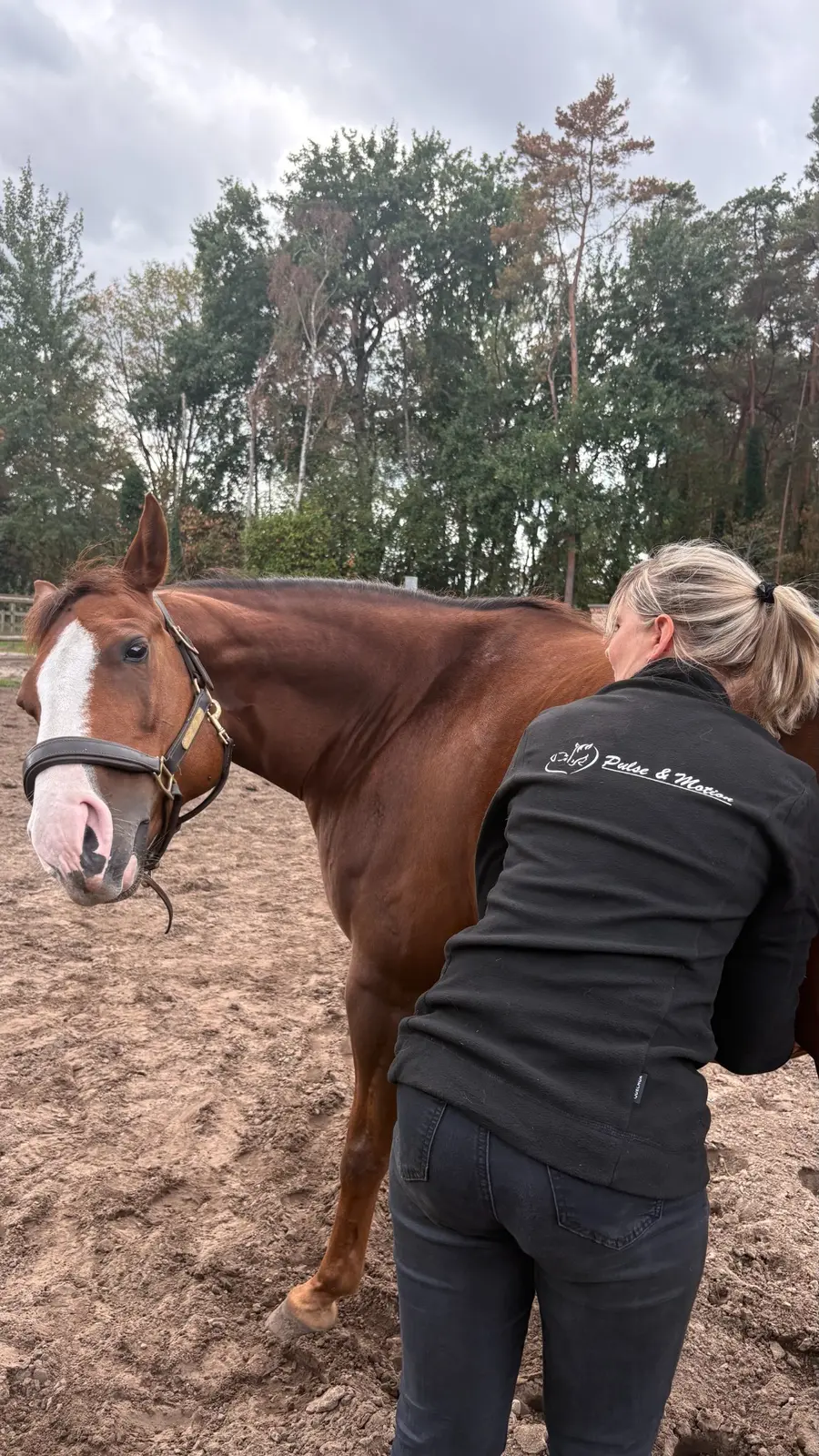
Equine osteopathy
A manual approach supporting mobility, connection and comfort — for leisure horses and sport horses alike.
What is equine osteopathy?
An osteopathic assessment looks beyond the place where a problem becomes visible. Astrid considers the musculoskeletal, visceral and craniosacral systems and how they influence one another.
Using targeted manual techniques, she aims to reduce functional movement restrictions and patterns of tension. The goal is to support natural mobility and recovery capacity so that the horse can move more efficiently, evenly and comfortably.
“A retired horse quietly grazing in a field and a top sport horse training every day are equally important to Astrid.”
When may an assessment be helpful?
The treatment
We discuss age, training, living conditions, medical history and the changes you have noticed.
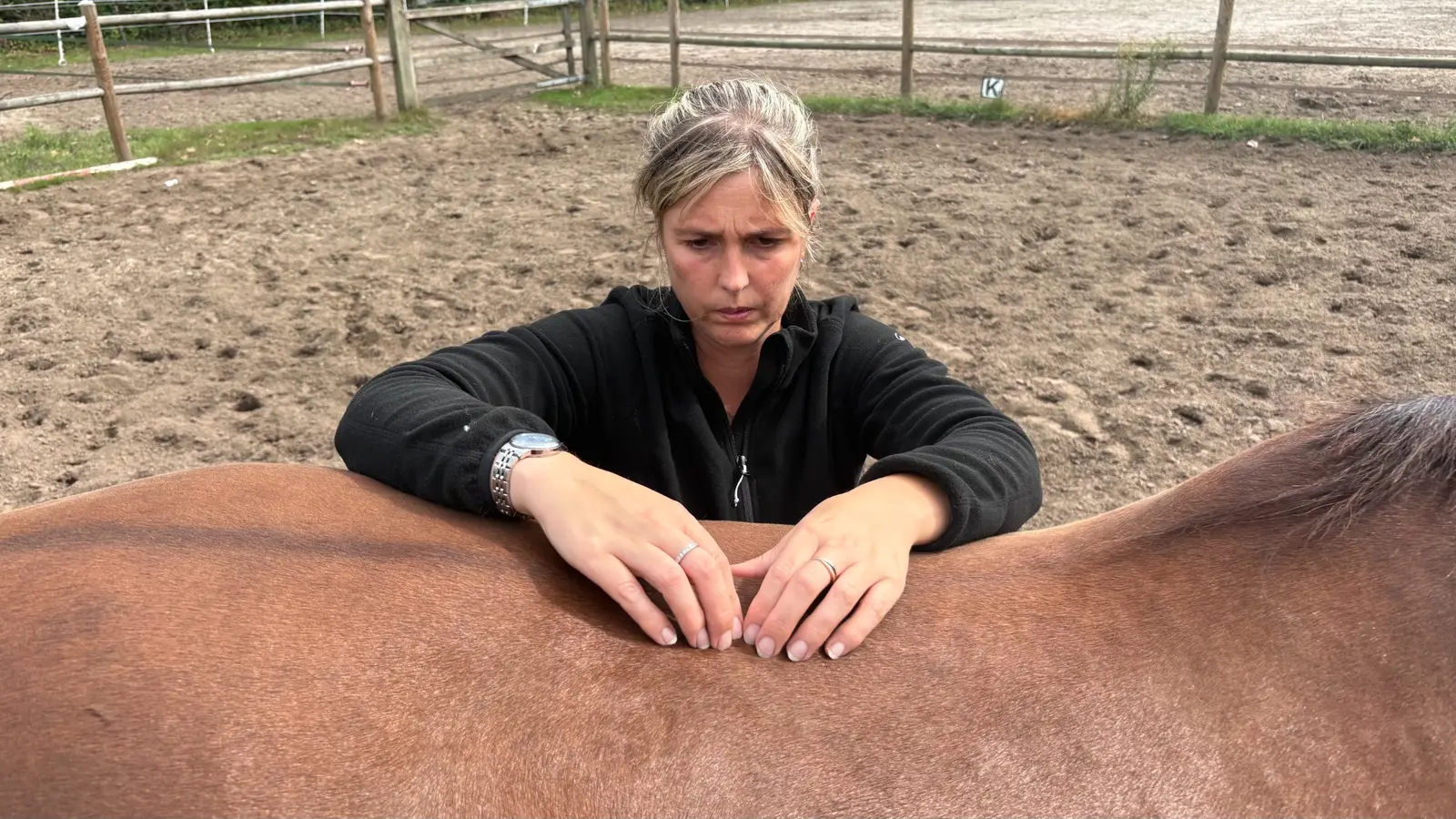
Astrid observes the horse standing and moving, assessing posture, symmetry, musculature and movement quality.
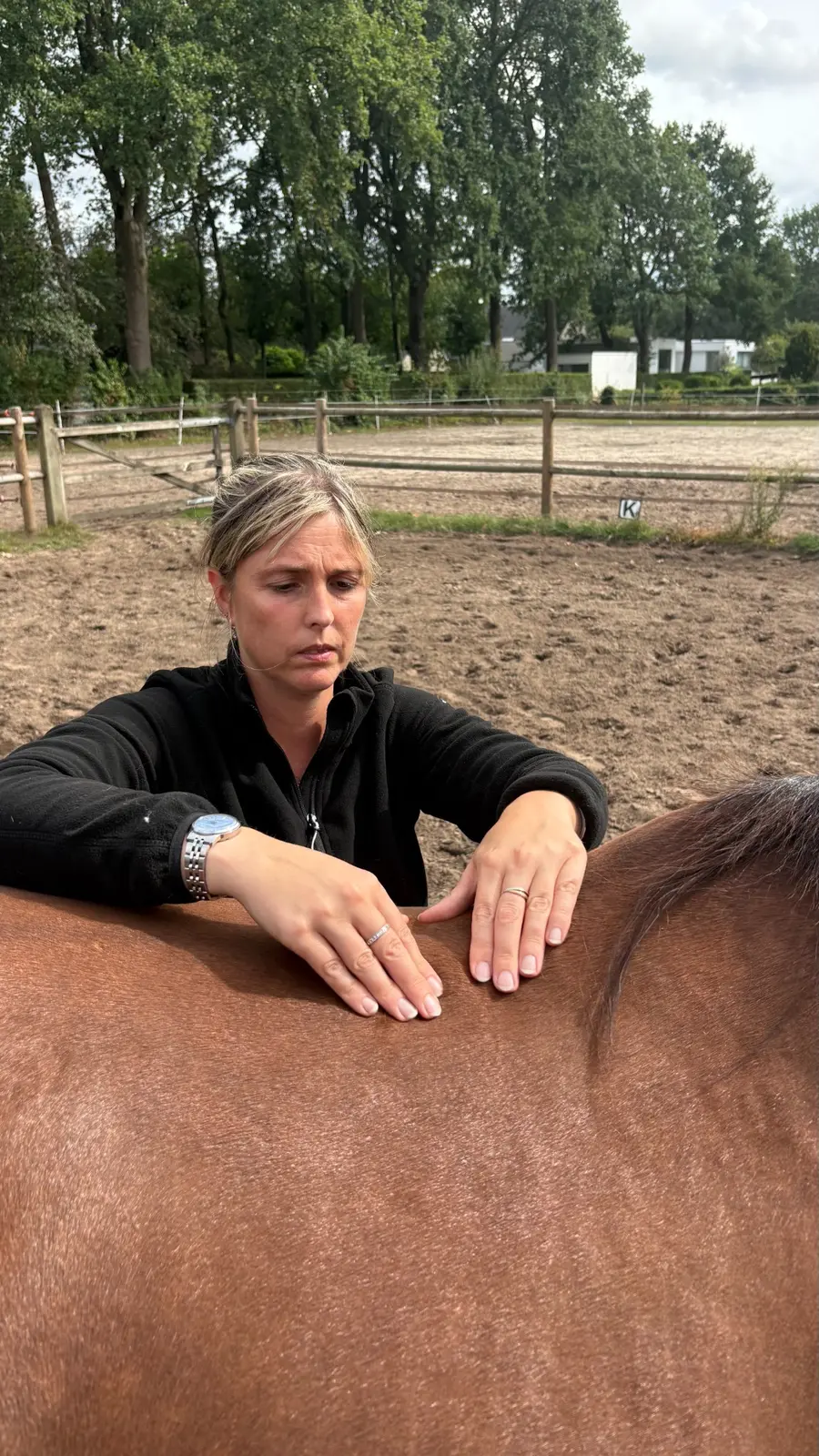
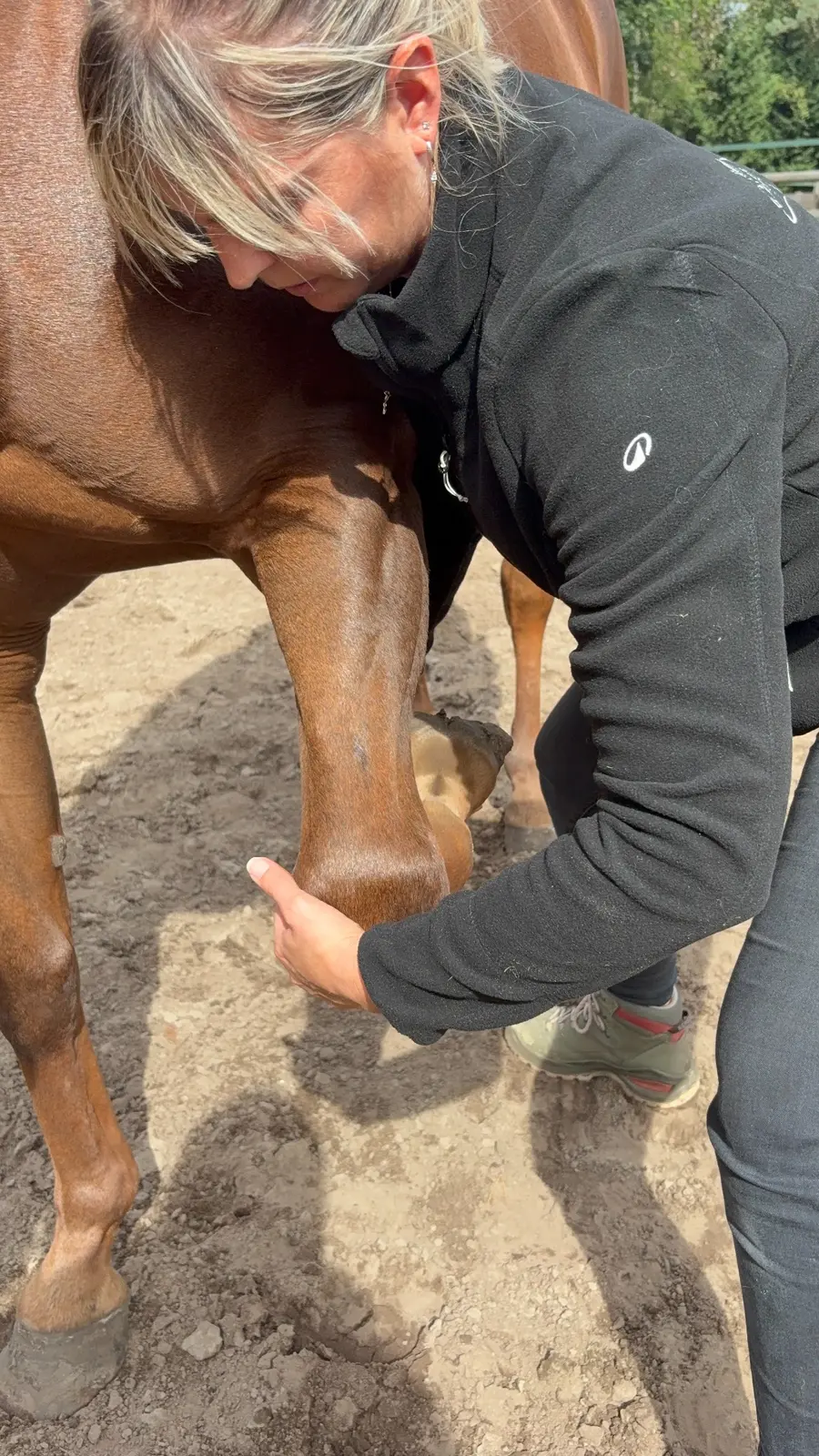
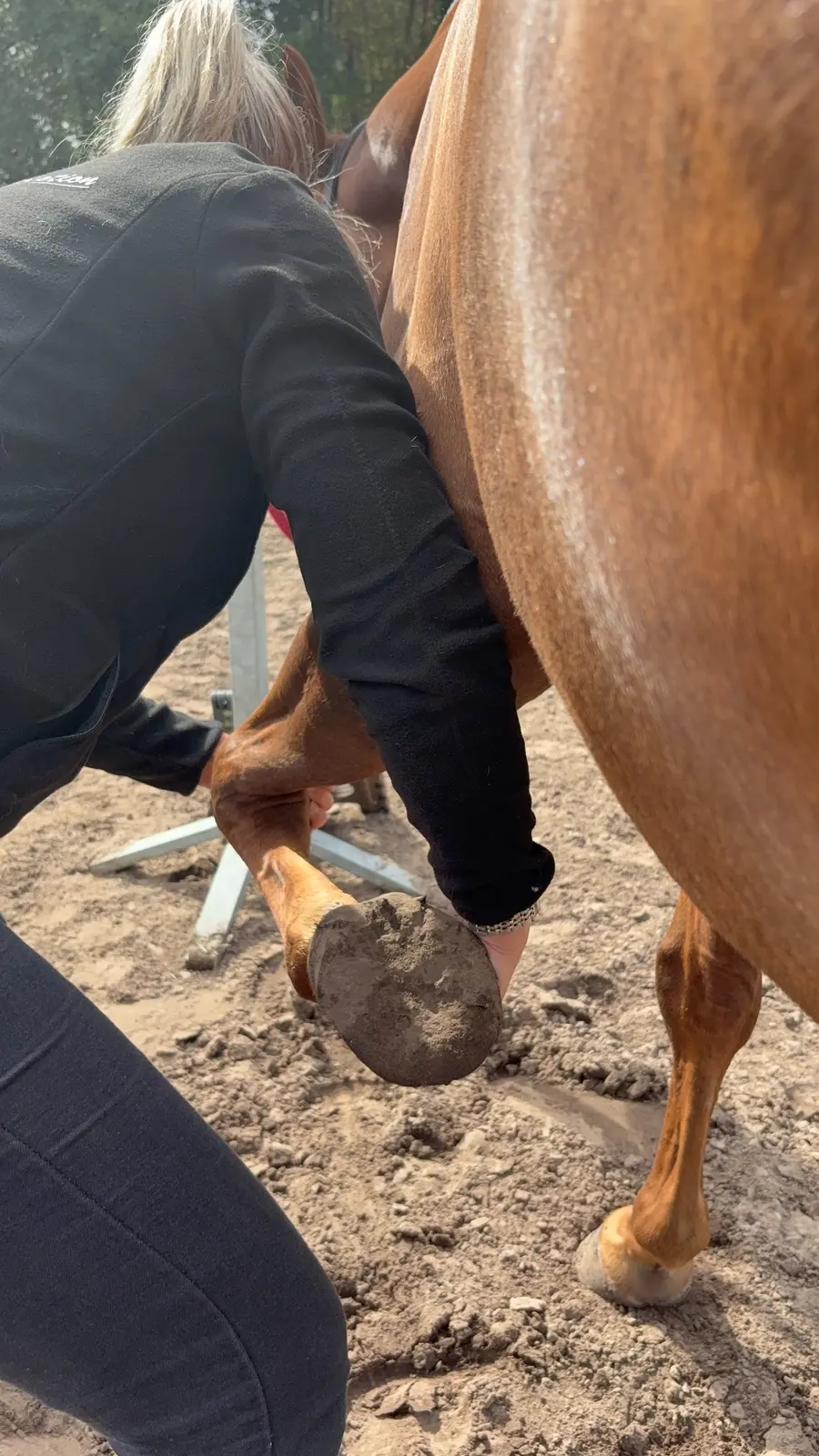
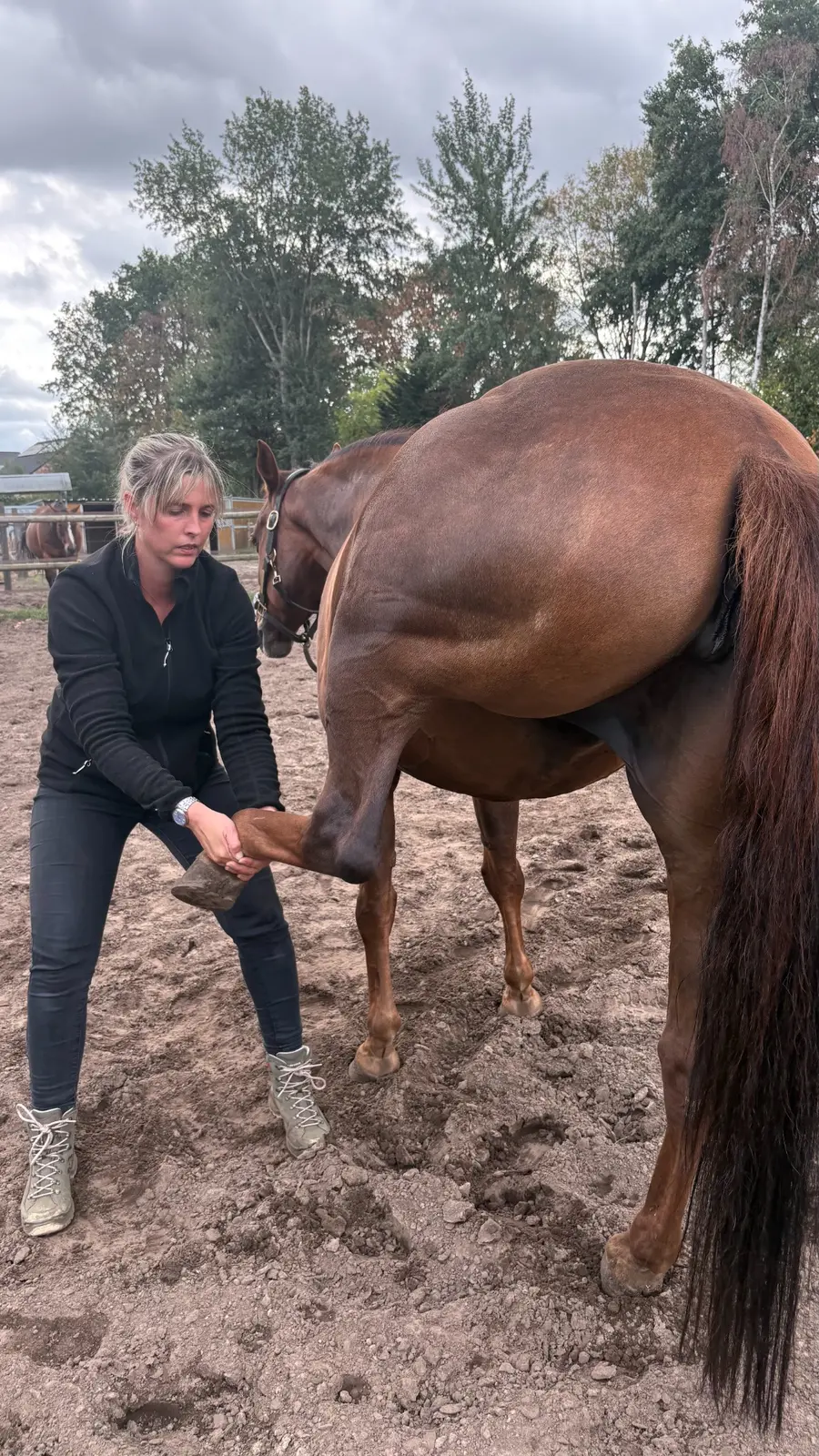
Palpation and mobility tests map restrictions. Treatment is adapted to the horse’s responses.
The horse is reassessed and, where appropriate, you receive advice on rest, training, recovery or collaboration with other professionals.
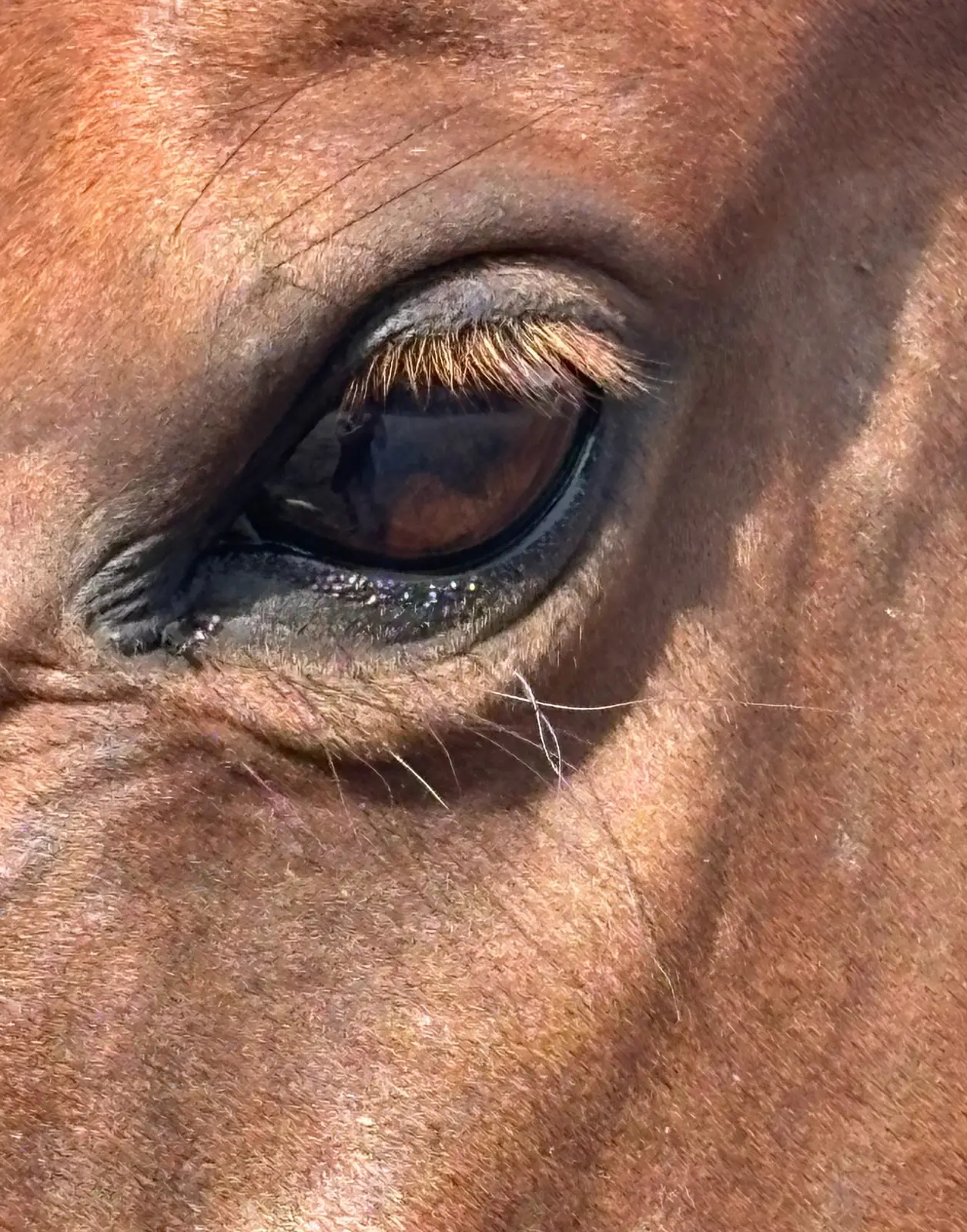
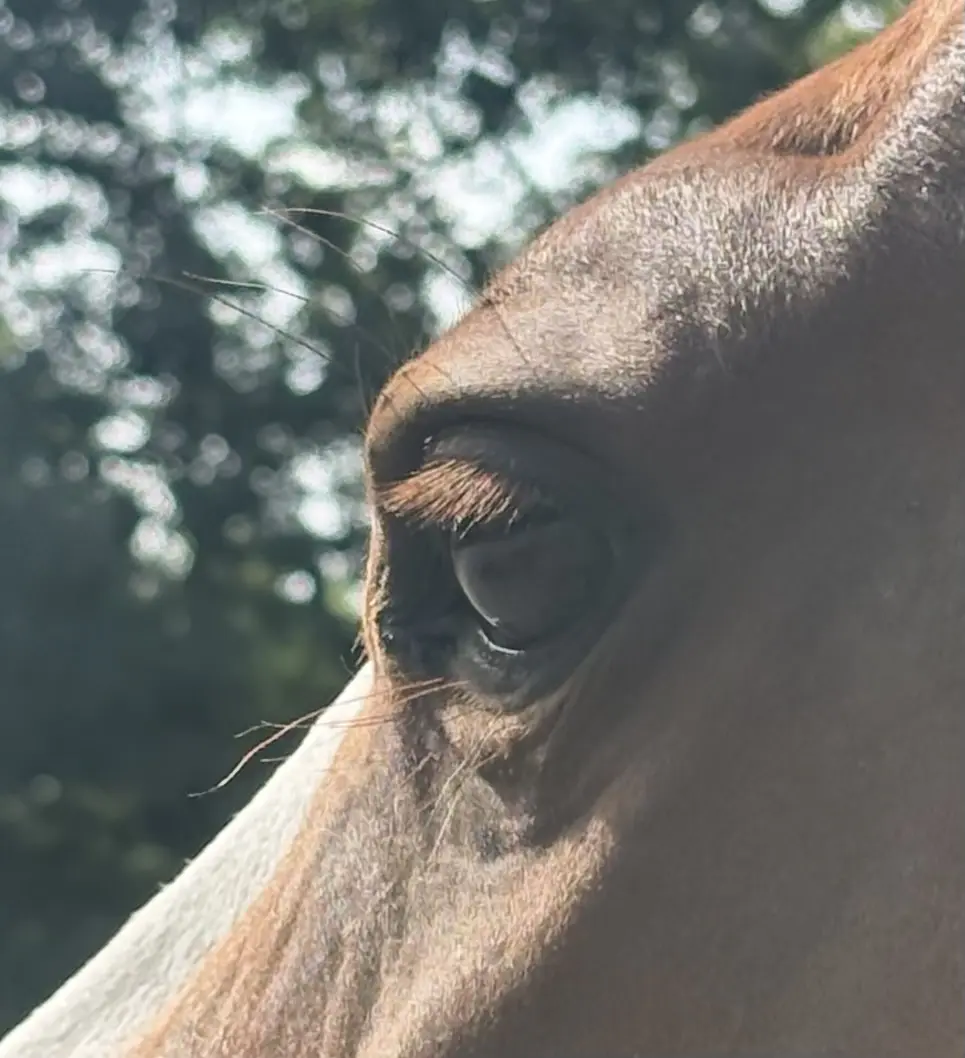
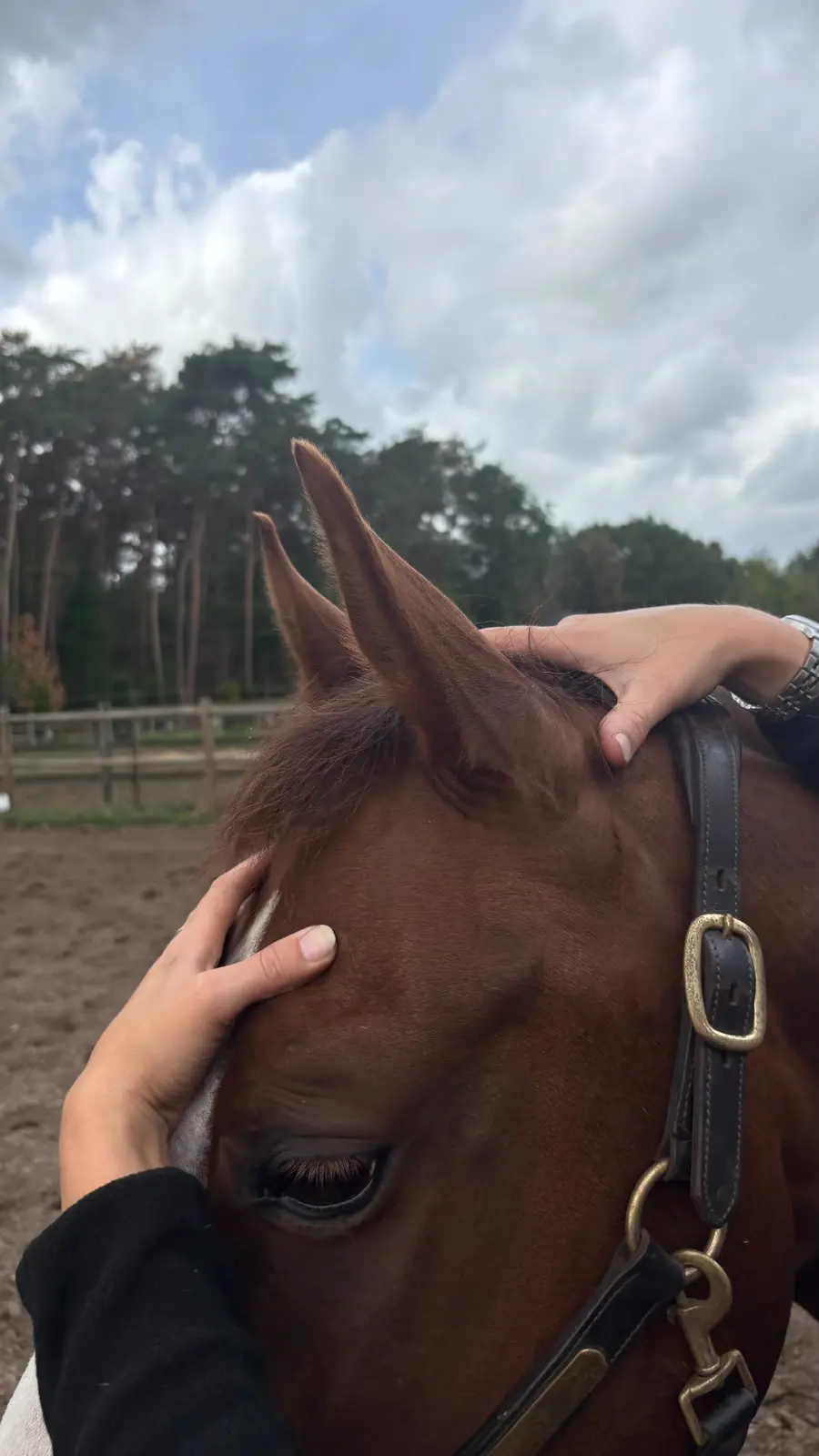
Treatment in practice
Practical information
Travel is free within 25 km of Stekene. Beyond that, €0.50 per kilometre is charged. When several animals are seen at the same location, the travel fee is charged only once.
Personal guidance
Tell Astrid what you have noticed. Together you can decide whether an osteopathic assessment is appropriate.